Sessy Boat
From prototype to production
The story continues on Lake Victoria
When we published our first article about the Sessy Boat project, the rotational molding oven in Kenya was almost operational, prototype test runs were underway in Hamburg, and the question on everyone’s mind was the same: would it actually work at scale?
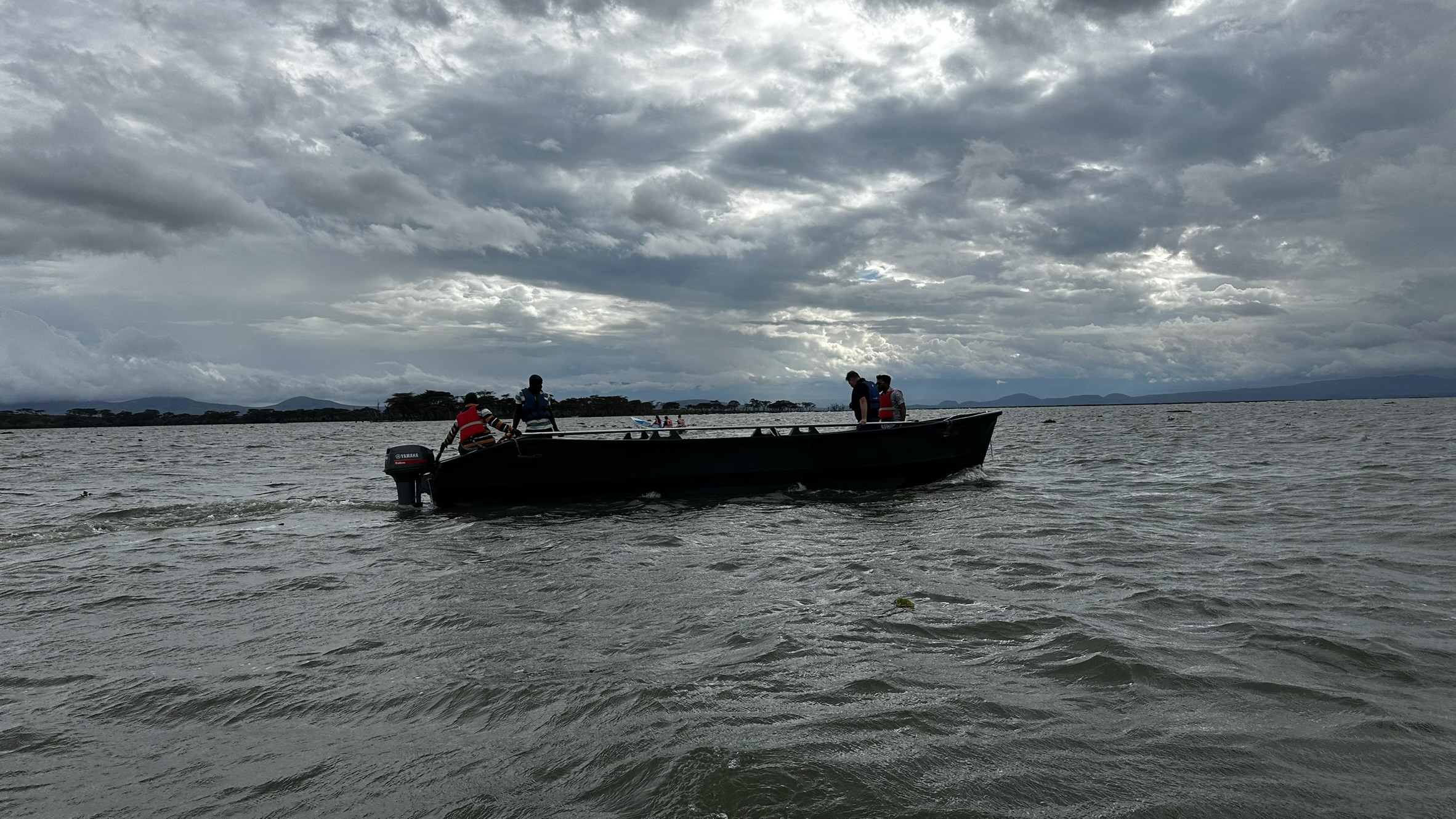
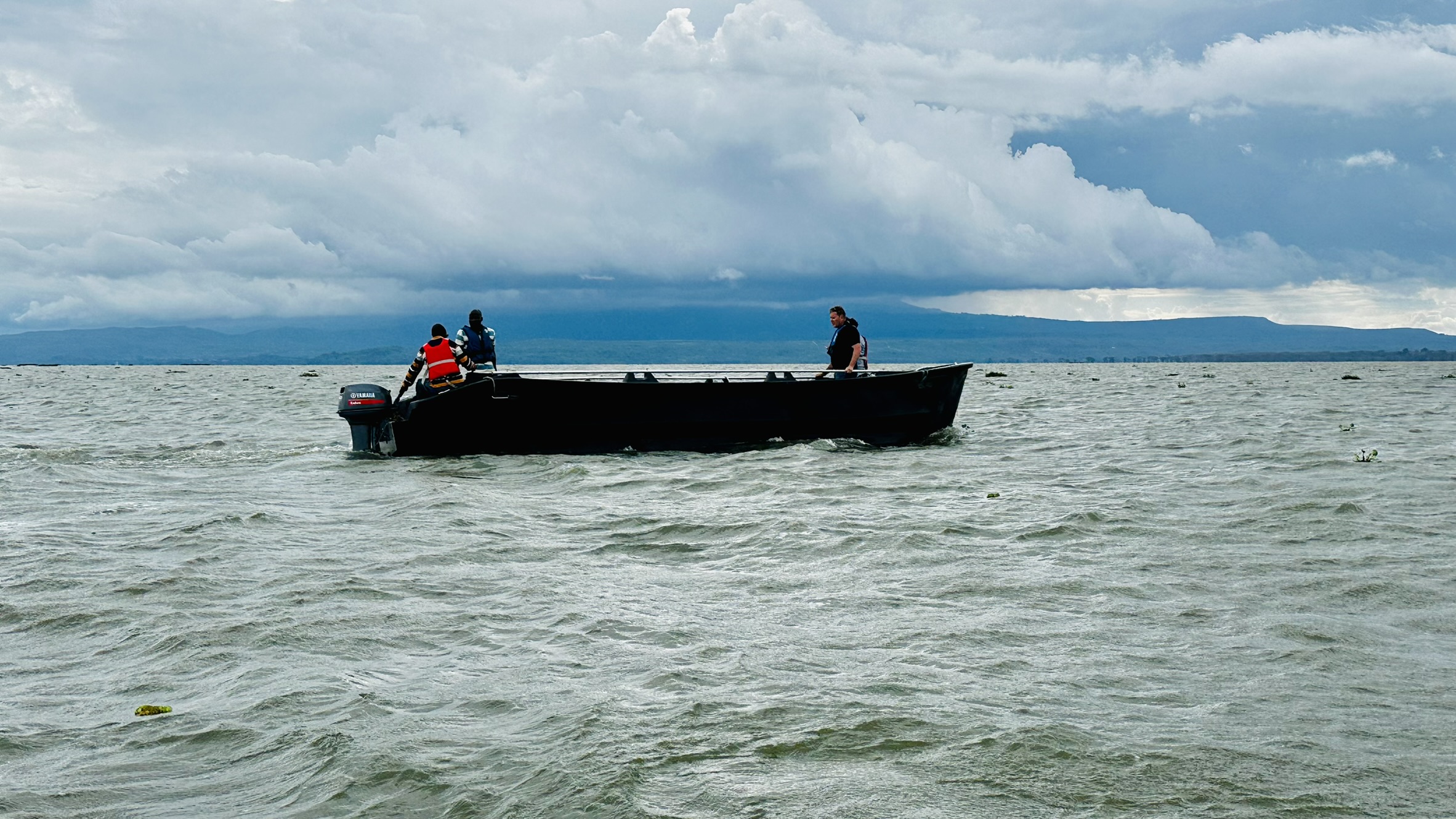
A few weeks ago, our CEO Udo A. Hafner attended the sea trials on Lake Victoria.
This article is the answer to that question.
The production milestone
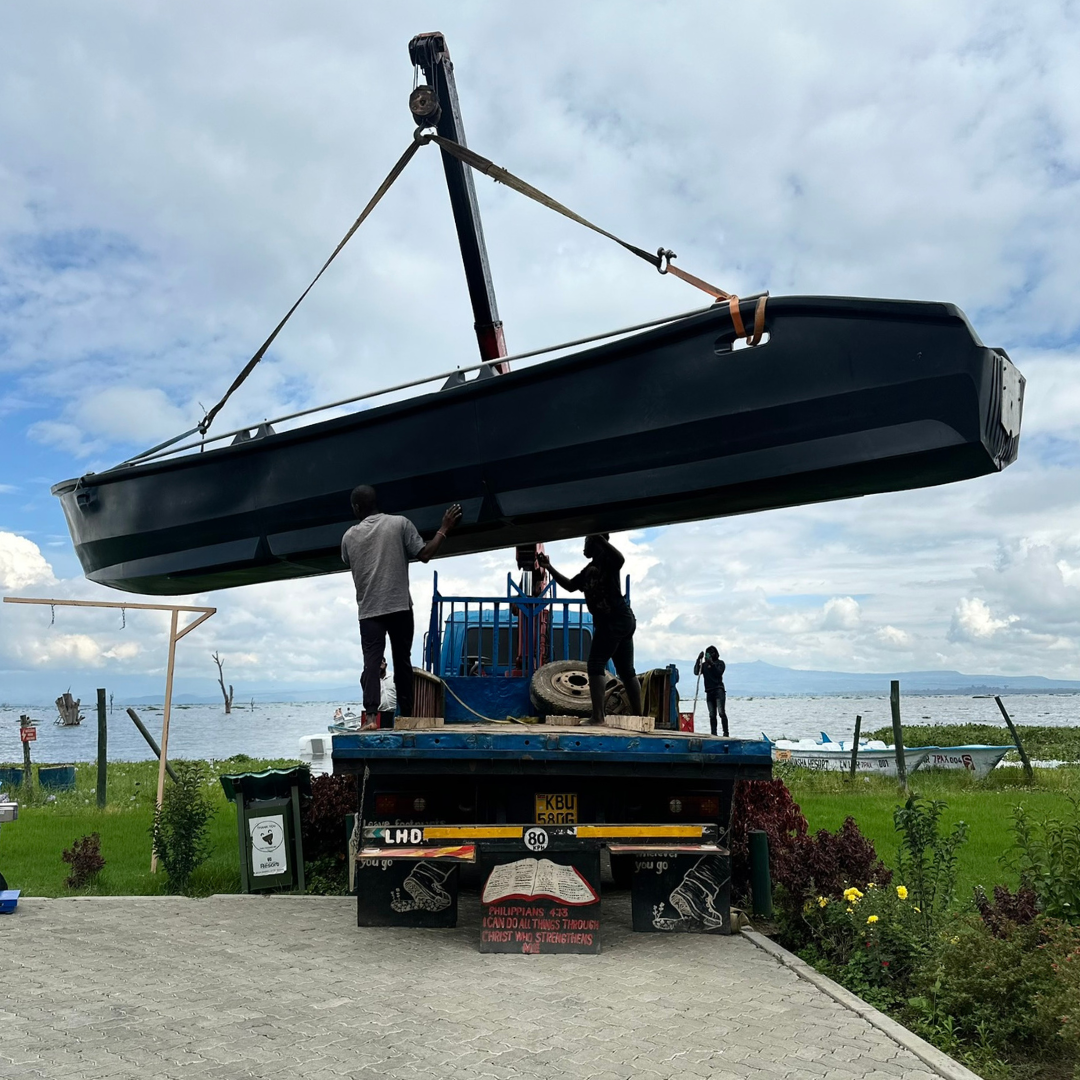
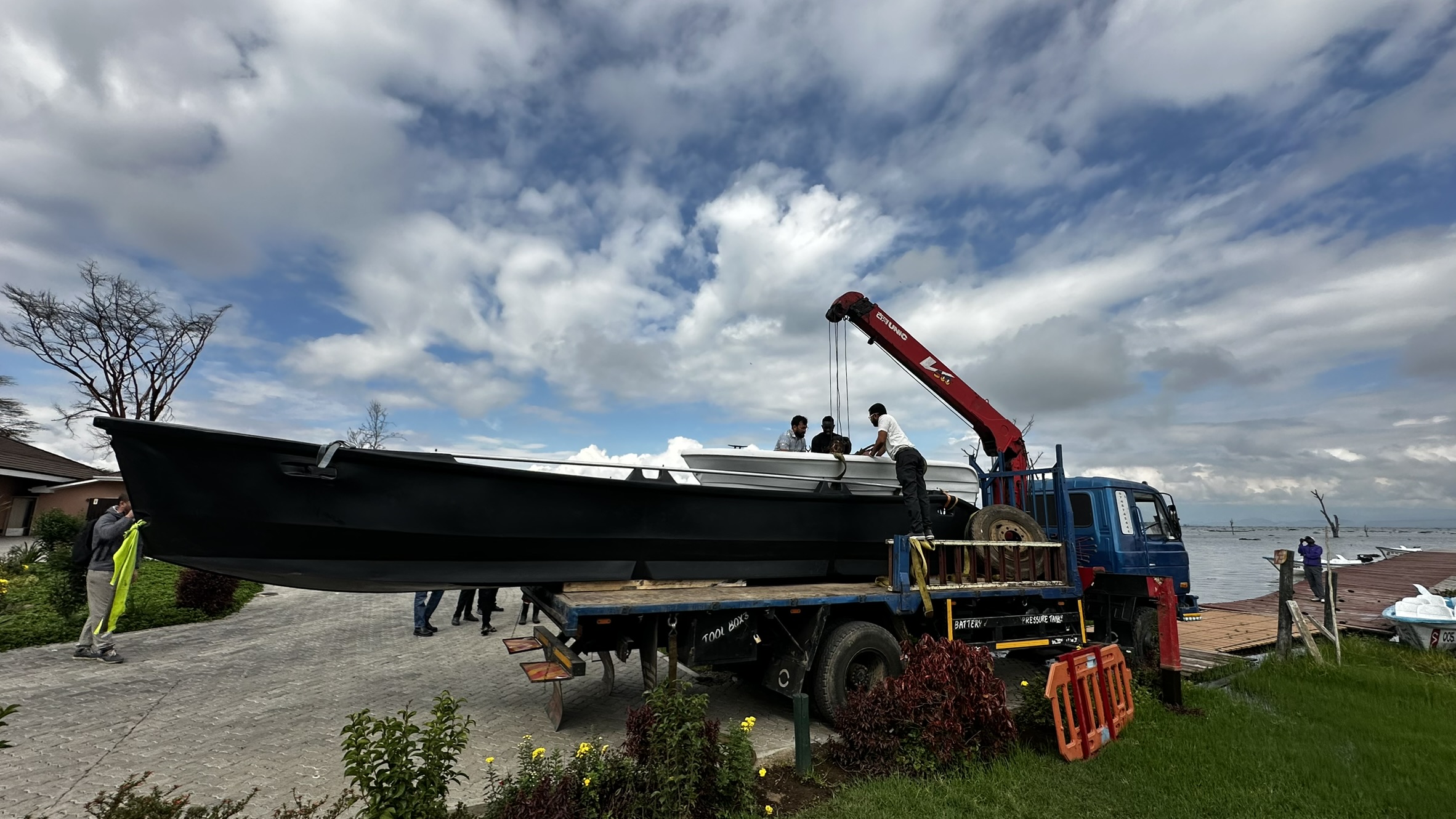
At the heart of this project was always a technical and logistical challenge that had never been attempted on this scale in Africa: producing 9 meters HDPE boats using industrial rotational molding, locally, in Kenya.
HDPE, high density polyethylene, was chosen for good reasons. It is robust, chemically resistant, fully recyclable, and versatile enough to be molded into complex shapes at relatively low cost. But producing a boat of this size through rotational molding requires an oven of extraordinary dimensions. The machine now operational in Kenya is, to our knowledge, the largest rotational molding oven in the world.
Getting to this point required years of development, refinement of the molds, and close collaboration with our partners. The Slovenian company Roto has been central to this effort from day one, bringing to the table decades of rotational molding expertise.
“Reaching production readiness in Kenya was not a given. Every step of the process had to be adapted to local conditions, local supply chains, and local realities. That is what made this project genuinely pioneering.”
Udo A. Hafner.
The quality journey
One of the most encouraging aspects of the production phase has been the speed at which quality has improved across successive hulls.
The first hull served as the real world validation of the mold geometry, the material behavior under production conditions, and the overall process. By the third hull, production quality had already reached 90% of the target standard. This kind of progression, from first prototype to a commercially viable product in a matter of hulls, is not something that can be taken for granted in any production context, whether in East Africa, or in Europe.
A well engineered boat is easier to build consistently. The speed of the quality progression on the Sessy Boat is, in part, a reflection of the design decisions made during the development phase.
Sea trials on Lake Victoria
In May, our CEO flew to Lake Victoria, the largest lake in Africa, covering 68,800 km², for the sea trials of the Sessy Boat.
For a vessel designed to serve working fishermen in all conditions, performance validation on the water is essential.
The results were clear. The boat performed exactly as our engineering predictions indicated. Every parameter we had modeled held up on the water.
What surprised us positively was the stability. The vessel demonstrated better stability than our calculations had predicted, which is significant for a working fishing boat. Fishermen work long hours, often in challenging conditions. A stable boat makes their work safer and more efficient.
“The moment a boat we designed in our offices touches the water, and during sea trials we discover it performing the way we designed it to perform, is always a meaningful moment, be it a catamaran, a houseboat, or a 9 meter plastic boat.
I must admit that for this special project on Lake Victoria, bearing in mind the context of what this boat represents for the people who will use it, it carried a significance that went beyond the technical validation.” Udo A. Hafner, CEO iYacht
What comes next
With the sea trials completed and production quality established, the project moves into its next phase: CE certification. iYacht will manage this process, drawing on our experience as an authorized partner of Swiss Lloyd and our in-house expertise in CE marking and wide knowledge of all the ISO standards.
The production model developed for the Sessy Boat fishing vessel is already informing the development of additional platforms. Houseboats hulls based on the same sustainable HDPE construction approach are in planning, but this is another story still in writing.
A project that carries meaning
The fishing boats currently in use on Lake Victoria are, for the most part, made from illegally logged tropical hardwood. They deteriorate in less than ten years, they take on water constantly, they lack lighting and safety equipment, and the fuel that powers them pollutes the lake directly. More than a thousand people die on the lake every year.
The Sessy Boat does not solve all of these problems on its own. But it is a meaningful contribution to a better answer. A safe, sustainable, locally produced vessel that fishermen can actually afford and that does not damage the ecosystem they depend on.
We are grateful to all the partners who have made this possible: E-Wave GmbH, Roto, and everyone involved on the ground in Kenya. And we look forward to the next chapter.