Boat weight in yacht design.
Why do we pay close attention to weight management?
Weight management is one of the less visible parts of yacht design and engineering, but it is one of the areas where our team pays particular attention, since it has a direct impact on performance, stability, safety and certification.
It is one of the parameters that comes up most often in conversations between our naval architects. At iYacht, tracking weight, and following how it changes through every phase of an iterative design process, is simply part of how we work.
What we have noticed is that private clients and, in some cases, boat builders and shipyards do not always give it the same level of attention. From our perspective it is not a negligible parameter, so we keep an eye on it throughout a project, in some cases even when it is not explicitly stated in our scope of work.
We spoke with Mattia Lugli and Udo A. Hafner about why weight matters so much, and what happens when it is left unchecked.
A parameter linked to everything else
“Clients often misunderstand how closely space, weight, performance and stability are connected,” explains Udo A. Hafner. “A decision made for one of these parameters almost always has a consequence on the others. You cannot really discuss one of them in isolation.”
This interconnection is rooted also in the way boats are designed. The process follows what is commonly described as a design spiral: at every modification or subsequent step, the newly defined parameters can feed back into decisions that had already been taken. It is an iterative process, and having all the required competences inside the team allows us to move through those iterations quickly.
On top of these normal refinements, which occur at every loop of the spiral, there are the inevitable changes requested by the client. Requirements become clearer as the project takes shape, interiors and amenities tend to grow or simply change. An owner may reconsider some aspects of the boat as construction approaches, or their needs may have evolved in the meantime, or new boats may have reached the market with features they would like to replicate on the unit being designed.
Why weight and stability cannot be separated
From a technical point of view, this topic is rooted in basic naval architecture. When a yacht heels, the underwater shape of the hull changes, and so does the point through which the buoyancy force acts. For small angles of heel, that point can be treated as fixed, and it is known as the metacentre, a reference determined purely by the geometry of the hull.
A yacht’s stability depends on the distance between the metacentre and the centre of gravity, a value called the metacentric height, or GM. The lower the centre of gravity sits relative to the metacentre, the greater the righting effect that brings the boat back upright after heeling. Add weight in the wrong place, raise the centre of gravity, or shift it too far from the design position, and GM changes, along with the boat’s righting ability at every angle of heel.
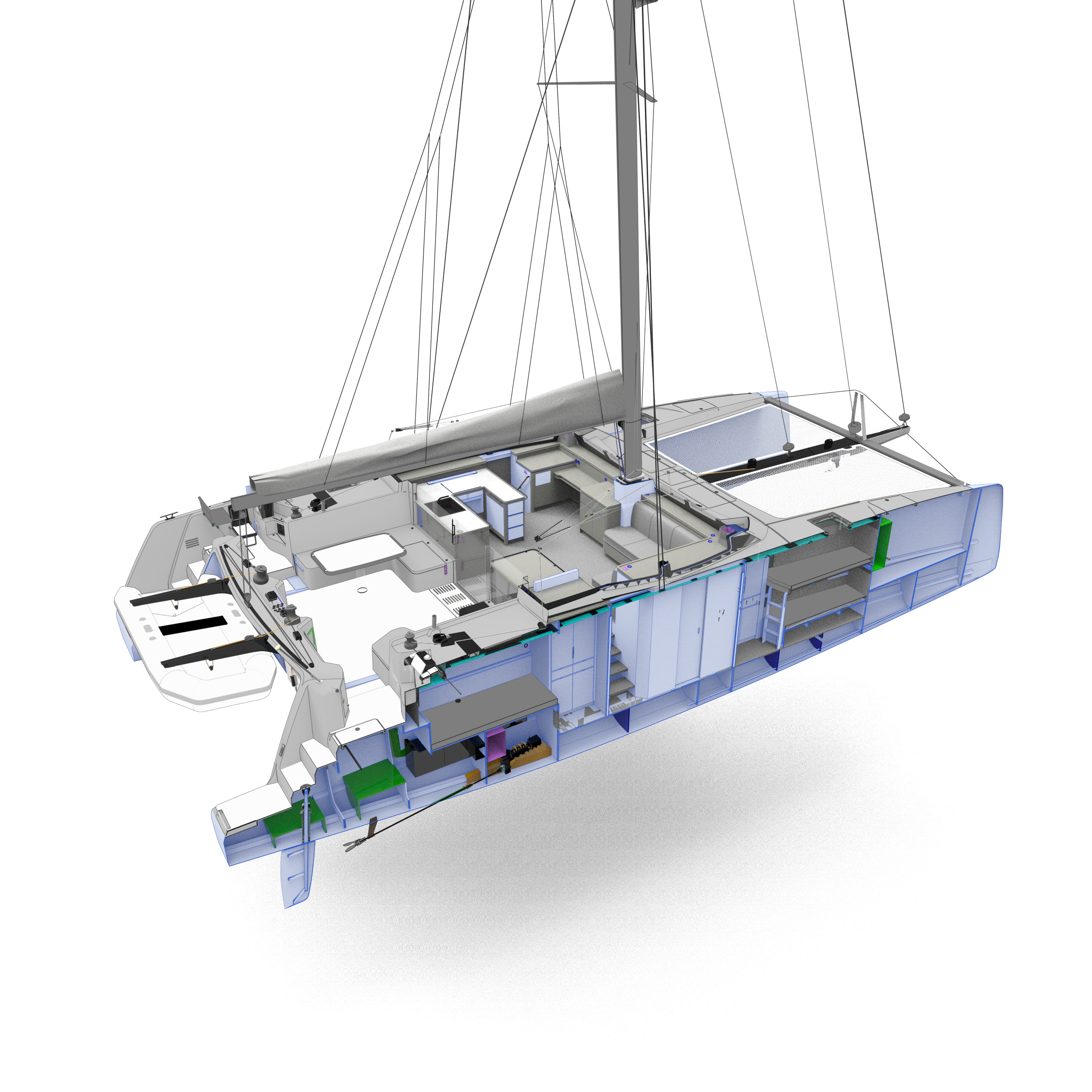
This is why naval architects keep what is often called a weight schedule throughout a project: a running record of every item on board, its mass, and its position in three dimensions. Every accessory, tank, or piece of furniture added to a boat is a new entry that adds mass, shifts the vertical and longitudinal centre of gravity, however slightly.
The centre of gravity does not only matter as a fixed point, it also matters how it moves during the navigation. Fuel is consumed over the course of a voyage, and its weight decreases accordingly, which is why the fuel tank is often positioned as close as possible to the centre of gravity. Keeping it there limits the change in trim as the tank empties, rather than letting the boat’s balance shift progressively over a long crossing.
The impact of weight changes with the type of hull
Weight does not affect every boat in the same way, and this is one of the areas where working across a wide range of projects, sailing yachts, planing motor boats, displacement cruisers, catamarans, in aluminium or in composite, gives our team a comparative view that a firm or yard focused on a single boat type does not have.
On a displacement hull, top speed is dictated mainly by waterline length rather than by installed power. Past a certain point, adding more power produces very little extra speed, because wave making resistance grows sharply as speed increases relative to that length. Here, weight has more of an effect on fuel consumption and range than on the maximum speed the boat can reach, and a heavier boat can, within reason, even improve comfort at sea by reducing how much the hull reacts to wave motion. More weight is not automatically a disadvantage on this type of hull.
Planing hulls work differently. Weight has an immediate effect on both performance and fuel consumption, and it is common for a finished boat to end up heavier than the figure used in the original performance calculations, since items such as the crew, tender, stores and personal belongings are not always accounted for from the start. This is one of the reasons why some boats never quite reach the top speed originally advertised for the design. At iYacht we are aware of this, so we include a margin in our calculations and keep a close eye on the weight precisely to avoid this common error.
On a sailing yacht with a ballasted keel, the earlier point about the centre of gravity becomes just as important as the total weight itself. It is not only how much weight is on board that matters, but where it sits. Weight kept low, in the keel or the ballast, works in the boat’s favour, while the same weight placed higher up works against it.
The priorities linked to weight also shift with the type of client and use of the boat. On a private yacht, weight is often balanced against comfort and personalisation. On a commercial vessel, the same parameter tends to be weighed more strictly against operating cost and reliability over time.
The domino effect of small additions
“Twenty kilograms on a thirty tonne boat feels irrelevant,” says Mattia Lugli. “But twenty kilograms at a time, repeated across dozens of decisions, quickly becomes two hundred, then four hundred, sometimes a thousand kilograms. On a thirty tonne boat, that difference matters.”
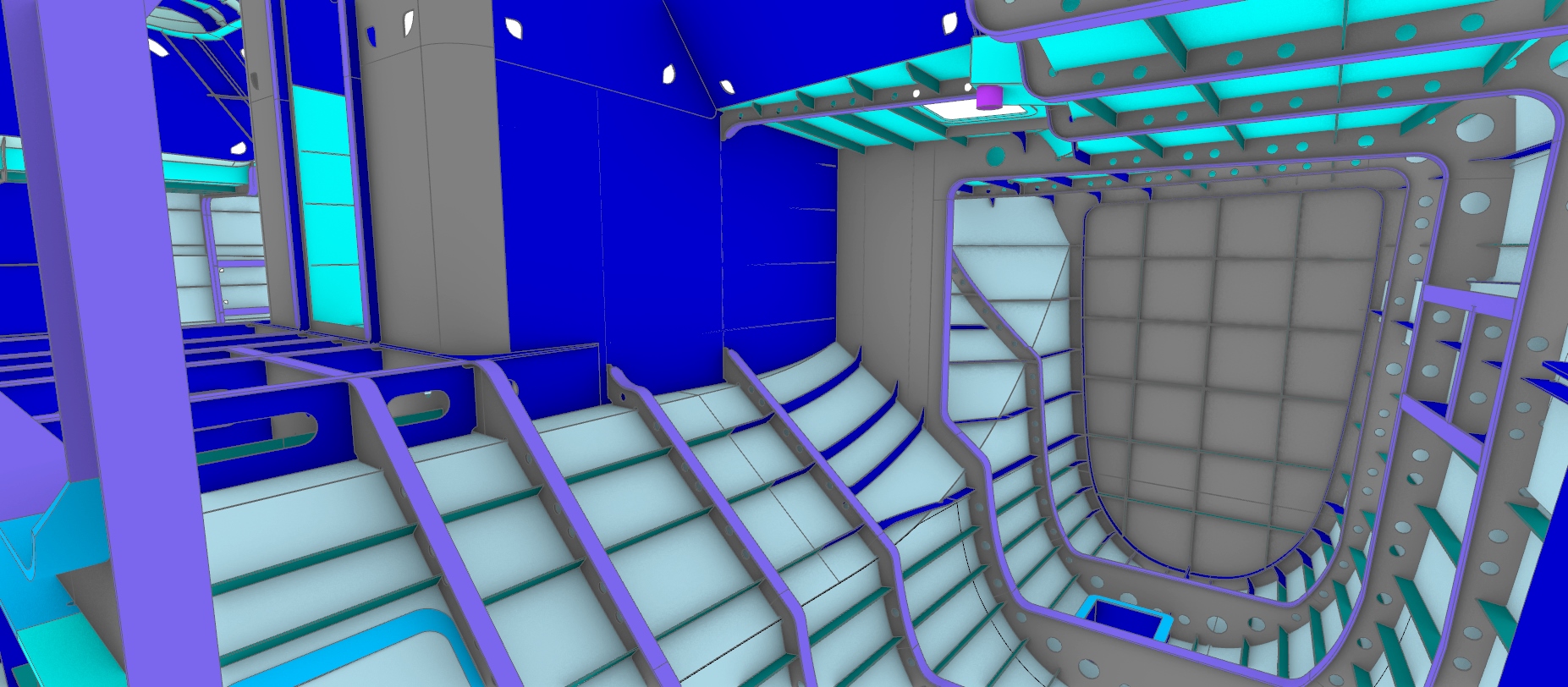
One project illustrates the point well. A client asked for the bottom plating to be increased from 6 mm to 8 mm, not because the structural calculations required it, but to achieve a heavier, more solid feel underfoot. After discussing it with the owner, the request was satisfied and the plating increased. What we had to point out was that this was a change with consequences, not the simple upgrade the client initially had in mind.
“It is a legitimate request, and the client is free to make it,” says Mattia. “But in the client’s perception these are usually minor changes, and more often than not they have major implications. In many cases it affects the overall weight significantly, it changes the weight distribution, and depending on the boat, it can push you outside the assumptions used for calculating stability and the rest of the structure.”
Defining a weight budget from day one
The way we manage this is by setting a weight budget as early as possible in the design process, together with a realistic margin that leaves room for the new additions and ongoing changes that will occur.
“If from the beginning there is a weight budget that allows some flexibility, for example ten thousand kilograms with a margin of around five hundred, performance stays close to the original target even if the client adds a bathtub, a boiler, or marble finishes,” explains Mattia. “The margin exists precisely so that these choices can be accommodated without compromising the boat performances, safety and stability“
The risk appears when a project drifts meaningfully outside that margin. “If you go significantly over budget, you risk having to redo the structural sizing, the stability calculations, everything that was based on the original weight assumptions,” Mattia continues. “At some point, the boat may no longer be safe, nor the compliant vessel it was designed to be, because the scantlings and the CE marking were calculated for a different weight.”
There has to be a clear limit, and part of our responsibility is explaining where it sits and why. It is natural for a project to evolve over time, there will always be modifications, and we have to stay flexible enough to accommodate them.
Setting a realistic weight budget early, tracking every addition against it, and being transparent with clients about where the margin stands does not remove the owner’s freedom to personalise the boat, it keeps that freedom within limits that do not compromise safety, compliance or the performance the project was designed for.